
A little background:
I’ve been painting for roughly 9 years now and it all started back in PA using acrylic paint. There, thanks to the humidity I was able to blend and blend. Now that I live in Las Vegas I’ve found that the stark single digit humidity no longer lets me blend. I feel like acrylic paint dries before reaching the canvas. It’s the worst! So I turned to oil paints and oh the doors it opened.
Since my studio is in a living area in our house, I use water-mixable oil paints to avoid harsh fumes and chemicals and now that I’ve been using them for a year I’ve learned a few things and they have become my favorite medium to use. Here is a link to my favorite water-mixable oil paint so far. I love the consistency and the price is great too!
My most recently new skill learned (and still learning) is color glazing.
Simply put glazing uses pigment and a thin medium to add color over an under-painting. The paint must be a transparent color and is used to either add color to a black and white painting, enhance an existing color or cast shadows. It is a technique that has been used for centuries.
For adding color the under-painting is usually black and white and it allows the artist to establish values. I have found that this method adds depth and flexibility. The drawback is that the painting must be completely dry before adding glazes (and we all know how long oils can take to dry) but the great part is that if you as the artist don’t like the color you chose you can just wipe it off and try a different color without hurting your painting. Simply mix the color you want with the thinner of your choice and spread it over the desired area. I use a soft brush to prevent any brush strokes from showing up but you might find a firmer brush works better for you
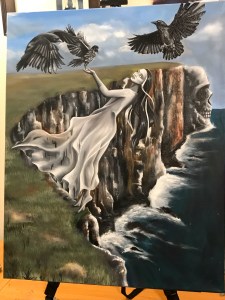
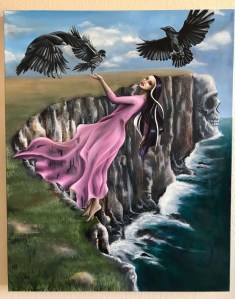
The painting shown is the first painting I finished with this method and it was so nice being able to “experiment” with the dress color and not have to start over every time like I used to have to do. In this painting “A Murder” only the woman and birds were done in this method but I love the look and depth that was added. Since I use water-mixable oils I can just add water to thin my paint to the right consistency for glazing but water should not be used for the final layer as water alone is not archival. I’ve found that modified linseed oil of course works well but lengthens the drying time of the paints so it’s not ideal (oil paints already take long enough to dry). Woil Water-mixable gel medium works best for me. It creates a smooth glaze and speeds up drying time.
For casting shadows you must wait till your painting is dry then take a thin glaze of black or Payne’s grey and glaze where you want the shadow to fall. This creates an illusion of depth that cannot be created without this method.
Here is a commissioned painting I did using glazes to add color for the entire painting. Some areas needed a few glazes to get the desired saturation while other areas needed only one glaze. Once dry I could add more shadows if I wanted to.

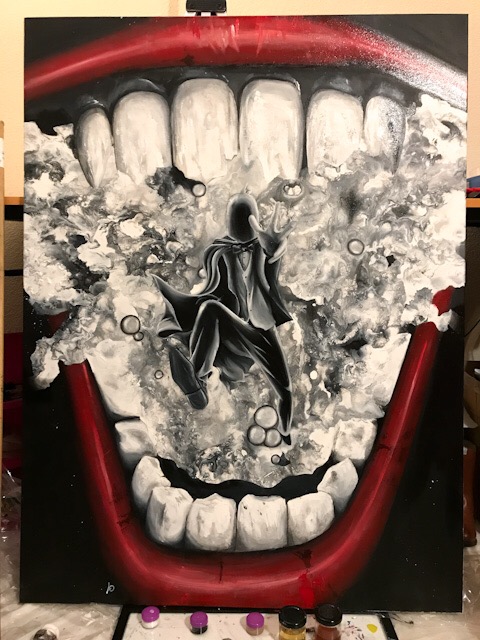
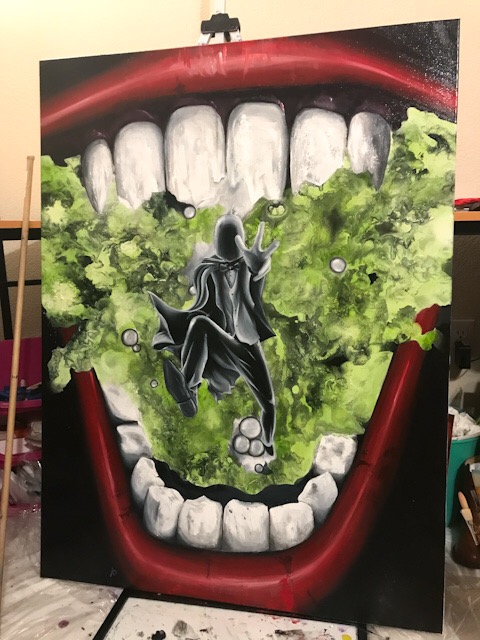
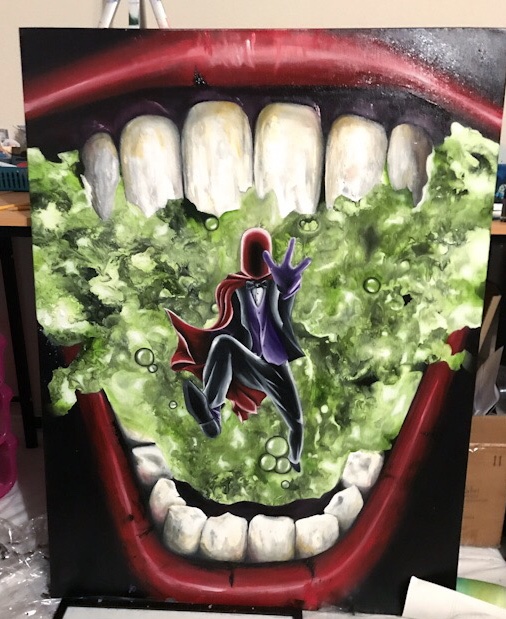
I’m no expert by any means but I hope to learn more and get better. I’ll probably go back and forth between color glazing and using color from the start as both have pros to offer and though I still love painting with bright colors from the start, for my bigger more detailed painting I’m starting to prefer working in black and white to establish my values and overall painting. When a painting is coming together and I’m not sure which colors I wants or placement, color glazing is the way for me; it’s much easier for me to correct an area using black and white than having to mix my colors again.
I hope this article helps you if you are curious about the subject.
Let me know what you think in the comments.
 Crafted By NEO
Artikel yang bermanfaat. Beli custom akrilik hanya di Cahaya Acrylic
LikeLike